
Joint Social, Behavioral and Experimental Economics & Economic Development Seminar: Corinne Low

Traditional Institutions in Modern Times: Dowries as Pensions When Sons Migrate
Subscribe to the SBEE mailing list to receive Zoom invitations and login information.
Abstract
This paper examines whether an important cultural institution in India – dowry – can enable male migration by increasing liquidity at the time of marriage. We hypothesize that one cost of migration is the disruption of traditional elderly support structures, where sons co-reside with parents and care for them in their old age. Dowry can attenuate this cost by providing sons and parents with a liquid transfer that eases constraints on income sharing. To test this, we collect two novel datasets on property rights over dowry among migrants and among families of migrants. Net transfers of dowry to a man’s parents are common. Consistent with using dowry for income sharing, transfers occur more when sons migrate, especially when they work in higher-earning occupations. Nationally representative data confirms that migration rates are higher in areas with stronger historical dowry traditions. Finally, exploiting a large-scale highway construction program, we show that men from areas with stronger dowry traditions have a higher migration response to a reduction in migration costs. Despite its potential negative consequences, dowry may play a role in facilitating migration and therefore, economic development.
Speaker bio
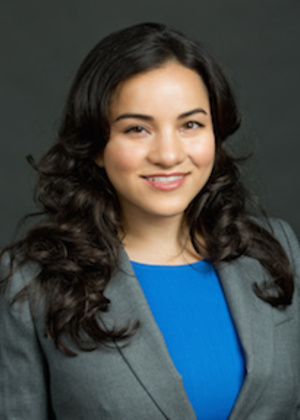
Corinne Low is an assistant professor of business economics and public policy at the Wharton School, specializing in labor and development economics. Her research brings together applied microeconomic theory with lab and field experiments to understand the determinants of who gets how much across gender and age lines. Current ongoing projects focus on a new technology to examine hiring discrimination, the tradeoff women make between career and family in the U.S., and the impact of teaching girls negotiation skills in Zambia.
Low received her PhD in economics from Columbia University and her undergraduate degree in economics and public policy from Duke University, after which she worked as a consultant for McKinsey and Co. At Wharton, Low teaches managerial economics in the MBA program.