
SBEE Seminar Series: Dean Eckles

Long ties: Formation, social contagion, and economic outcomes
Abstract:
Network structure can affect when, where and how widely new ideas, products and behaviors are adopted. Classic work in the social sciences has emphasized that "long ties" provide access to novel and advantageous information. In our empirical work, we show how particular life events (migration, education) are associated with forming long ties and how having long ties is associated with beneficial economic outcomes. Counties in the United States with more long ties (and more strong long ties) have higher incomes, lower unemployment and more economic mobility, even after adjusting for other measures of social connections.
These stylized facts are consistent with some models of contagion. In widely-used models of biological contagion, interventions that randomly rewire edges (generally making them "longer") accelerate spread. However, there are other models relevant to social contagion, such as those motivated by myopic best-response in games with strategic complements, in which individuals adopt if and only if the number of adopting neighbors exceeds a threshold. Recent work has argued that highly clustered, rather than random, networks facilitate spread of these "complex contagions." Here we show that minor modifications to this model, which make it more realistic, reverse this result: We allow very rare below-threshold adoption, i.e., rarely adoption occurs when there is only one adopting neighbor. In a version of "small world" networks, allowing adoptions below threshold to occur with order 1/√n probability — even only along some "short" cycle edges — is enough to ensure that random rewiring accelerates spread. Hypothetical interventions that randomly rewire existing edges or add random edges (versus adding "short," triad-closing edges) in hundreds of empirical social networks reduce time to spread.
In summary, we provide an empirical and theoretical view of the outsized role of long ties in the spread of valuable information and behaviors, even when those behaviors spread via threshold-based contagions.
This is joint work based on two papers: one on threshold-based contagions with Elchanan Mossel, M. Amin Rahimian and Subhabrata Sen, and one on formation of long ties and economic outcomes with Eaman Jahani, Samuel Fraiberger and Michael Bailey.
Speaker bio:
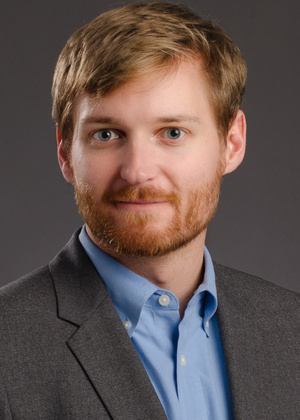
Dean Eckles is a social scientist and statistician. At the Massachusetts Institute of Technology, Dean is the Mitsubishi Career Development Professor, an associate professor in the Sloan School of Management, and affiliated faculty at the Institute for Data, Systems & Society in the Schwarzman College of Computing. Much of his research examines how interactive technologies affect human behavior, especially by mediating social influence. Dean also works on methods for inferring cause–effect relationships and on applied statistics more generally. Dean’s empirical work uses observational studies and field experiments involving hundreds of millions of people. His papers appear in Journal of the American Statistical Association, Proceedings of the National Academy of Sciences, Nature, Science, Management Science and other peer-reviewed journals and proceedings in statistics, computer science and marketing. He is co-organizer of the Conference on Digital Experimentation (CODE@MIT) and serves as associate editor for two departments at Management Science. He was previously a scientist at Facebook and Nokia. Dean completed five degrees, including his PhD, at Stanford University.
Subscribe to the SBEE mailing list to receive Zoom invitations and login information along with venue info for hybrid seminars.