
Social, Behavioral and Experimental Economics Seminar: Erik Snowberg

Education, Reference Points, and Happiness
Abstract: We study a reform that increased compulsory schooling in Britain. Using a regression discontinuity design, we find that, in line with prior studies, compulsory schooling caused an increase in income. However, it also caused a decrease in subjective well-being, or happiness. Using an extensive survey, we provide evidence that education affects both reference points and outcomes, but the former more than the latter. That is, while outcomes improve for those subject to compulsory education, they improve less than the individuals themselves expect they will.
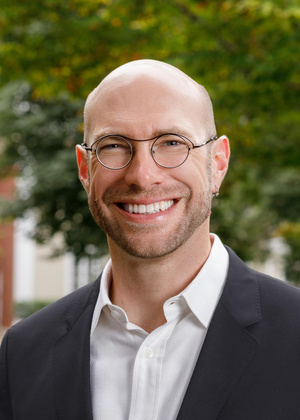
Speaker bio: Erik Snowberg is the Canada Excellence Research Chair in Data-Intensive Methods in Economics at the Vancouver School of Economics, University of British Columbia. Before joining UBC, he was professor of economics and political science at Caltech, where he was since completing his PhD at Stanford in 2008. His research has two foci: using social science theory to design better experiments that involve people, with applications in medicine and economic development; and combining behavioral economics with political economy to better understand the roots of partisan politics and its effects on policy. He holds undergraduate degrees in math and physics from MIT. Along with his position at UBC, he is a research associate with the National Bureau of Economic Research, and a research fellow at CESifo in Munich.
Subscribe to the SBEE mailing list to receive Zoom invitations and login information along with venue info for hybrid seminars.