
Social, Behavioral and Experimental Economics Seminar: Marco Islam

Motivated Risk Assessments
Subscribe to the SBEE mailing list to receive Zoom invitations and login information along with venue info for hybrid seminars.
Abstract
Do people form risk assessments to justify their actions? I investigate this question in a field experiment studying the dynamics of risk assessments for visiting a cafe during the Covid-19 pandemic. Randomly varying the incentive for a visit, I find that subjects with a high incentive visit cafes more often and downplay the risk compared with subjects with a low incentive. Importantly, the downplaying happens in anticipation of the visit and absent the acquisition of new information, suggesting that the assessment update justifies engagement in risky behavior. This finding is inconsistent with Bayesian updating but consistent with the notion of motivated reasoning. In additional analyses, I decompose perceived risk into different layers (risk for self and risk imposed on others) and explore which one is downplayed most. I study treatment effect heterogeneity, assess potential mechanisms and the spillover effects of motivated assessments.
Speaker bio
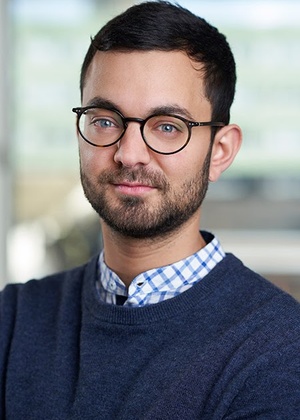
Marco Islam is a postdoc from Lund University, Sweden who uses both field and lab experiments to explore how people behave in economic settings. Islam's primary research interests lie at the interface between behavioral economics and environmental topics, with particular interest in understanding how people assess present and future risks. In addition, Islam is interested in studying the long-term nature of global problems, such as climate change, and in investigating how it affects cooperative as well as coordinative behavior. Much of Islam's research focuses on the behavioral aspects of intertemporal choice including issues of dynamic inconsistencies and the underpinnings of time-discounting.