
Social, Behavioral and Experimental Economics Seminar: Roseanna Sommers

Consent Searches and the Underestimation of Compliance
Abstract:
The main constitutional limitation on so-called “consent searches” by police is the voluntariness test: whether the “totality of the circumstances” surrounding the encounter indicates that a reasonable person would have felt free to refuse the officer’s request to conduct the search.
In three experiments, we investigate whether this legal inquiry is subject to a systematic bias, whereby uninvolved decision-makers overstate the voluntariness of consent and underestimate the psychological pressure individuals feel to comply. Across three pre-registered experiments, we approached participants (“Experiencers”) with intrusive search requests and measured their behavioral compliance, as well as their self-reported feelings of psychological freedom. A separate group of participants (“Forecasters”) reported whether they would comply if hypothetically placed in the same situation. Study 1 investigated participants’ willingness to allow experimenters access to their unlocked personal smartphones in order to read through their search histories on their web browsers — a private sphere where many individuals feel they have something to hide. Results reveal that whereas only 27% of Forecasters reported they would permit such a search, 92% of Experiencers complied when asked. Study 2 demonstrated that this underestimation-of-compliance effect held true when individuals were asked to permit a search of their purses, backpacks and other bags — traditional searches not eligible for the heightened legal protection extended to smartphones and other digital devices. Study 3 replicated the gap between Forecaster projections and Experiencer behavior in a more diverse sample, and established that Forecasters underestimate compliance even when their predictions are incentivized monetarily.
Speaker bio:
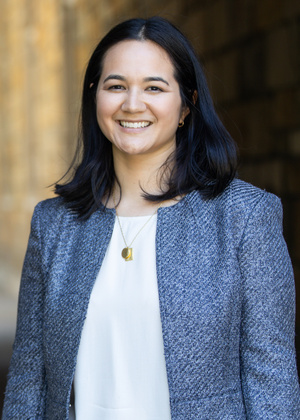
Professor Roseanna Sommers's teaching and research interests revolve around the many ways in which the law misunderstands people and people misunderstand the law.
Sommers's research examines people's intuitions about legal concepts such as consent, autonomy and moral responsibility. Her work is part of a growing interdisciplinary field known as experimental jurisprudence, which borrows empirical techniques from the social sciences to clarify core concepts in the law.
Her work asks questions like: How do people determine whether someone is acting voluntarily? How do we think about interferences to autonomy, such as coercion, deception, incapacity and manipulation? Are our legal doctrines defensible in light of empirical insights from the social and cognitive sciences? Her research has been published in peer-reviewed journals such as Science, Proceedings of the National Academy of Sciences, and Psychological Science, as well as in law reviews such as the Yale Law Journal and the Stanford Law Review. She is currently co-leading a study funded by the National Science Foundation on the psychology of compliance.
Prior to joining the Michigan Law faculty, Sommers taught at the University of Chicago Law School as a Harry A. Bigelow Teaching Fellow. She is the founder and director of the Psychology and Law Studies (PALS) Lab, which conducts original research at the intersection of psychology and law. She also co-organizes the Chicago/Michigan PALS speaker series, a virtual workshop hosted in collaboration with the University of Chicago Law School.