
Social, Behavioral and Experimental Economics Seminar: Stefanie Stantcheva

Zero-Sum Thinking and the Roots of U.S. Political Divides
Subscribe to the SBEE mailing list to receive Zoom invitations and login information along with venue info for hybrid seminars.
Abstract
We examine the causes and consequences of an important cultural and psychological trait: the extent to which one views the world in zero-sum terms– i.e., that benefits to one person or group tend to come at the cost of others. We implement a survey among approximately 15,000 individuals living in the United States that measures zero-sum thinking, political and policy views, and a rich set of characteristics about their ancestry. We find that a more zero-sum view is strongly correlated with views about the importance of government, the value of redistributive policies, the impact of immigration, and one’s political orientation. We find that zero-sum thinking can be explained by experiences of an individual’s ancestors (parents and grandparents), including the amount of intergenerational upward mobility they experienced, the degree of economic hardship they suffered, whether they immigrated to the United States or were exposed to more immigrants, and whether they had experiences with enslavement. These findings underscore the importance of psychological traits, and how they are transmitted intergenerationally, in explaining current political divides in the United States.
Speaker bio
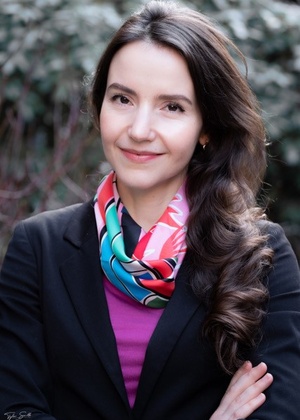
I am the Nathaniel Ropes Professor of Political Economy at Harvard and founder of the Social Economics Lab.
I study the taxation of firms and individuals, as well as how people understand, perceive and form their attitudes towards public policies. My work has centered around the long-lasting effects of tax policy – on innovation, education and wealth. Recently, I have studied how R&D policies can be improved to foster innovation, how income and corporate taxes have shaped innovation over the 20th century, and how student loans can be structured to improve access to education. I have also explored people’s attitudes towards taxation, health care, immigration policies, environmental policies and social mobility using large-scale Social Economics Surveys and Experiments.
I received my PhD in economics from MIT in 2014 and was a junior fellow at the Harvard Society of Fellows 2014-2016 before joining the Harvard Department of Economics in July 2016. I am currently co-editor of the Quarterly Journal of Economics.