
Black@SI brings 12 members to AfroTech's 10th anniversary

It’s opening day at the AfroTech Conference Expo Hall. There’s a crowd at the doors and a floor full of recruiters on the other side.
Cameron Cornelious (BSI ’27), an undergraduate at the University of Michigan School of Information, is in that crowd at Houston’s George R. Brown Convention Center, waiting for the doors to open at noon. He’s the finance and operations chair of Black@SI, an academic and social support network for Black students, faculty, alumni and allies at UMSI.
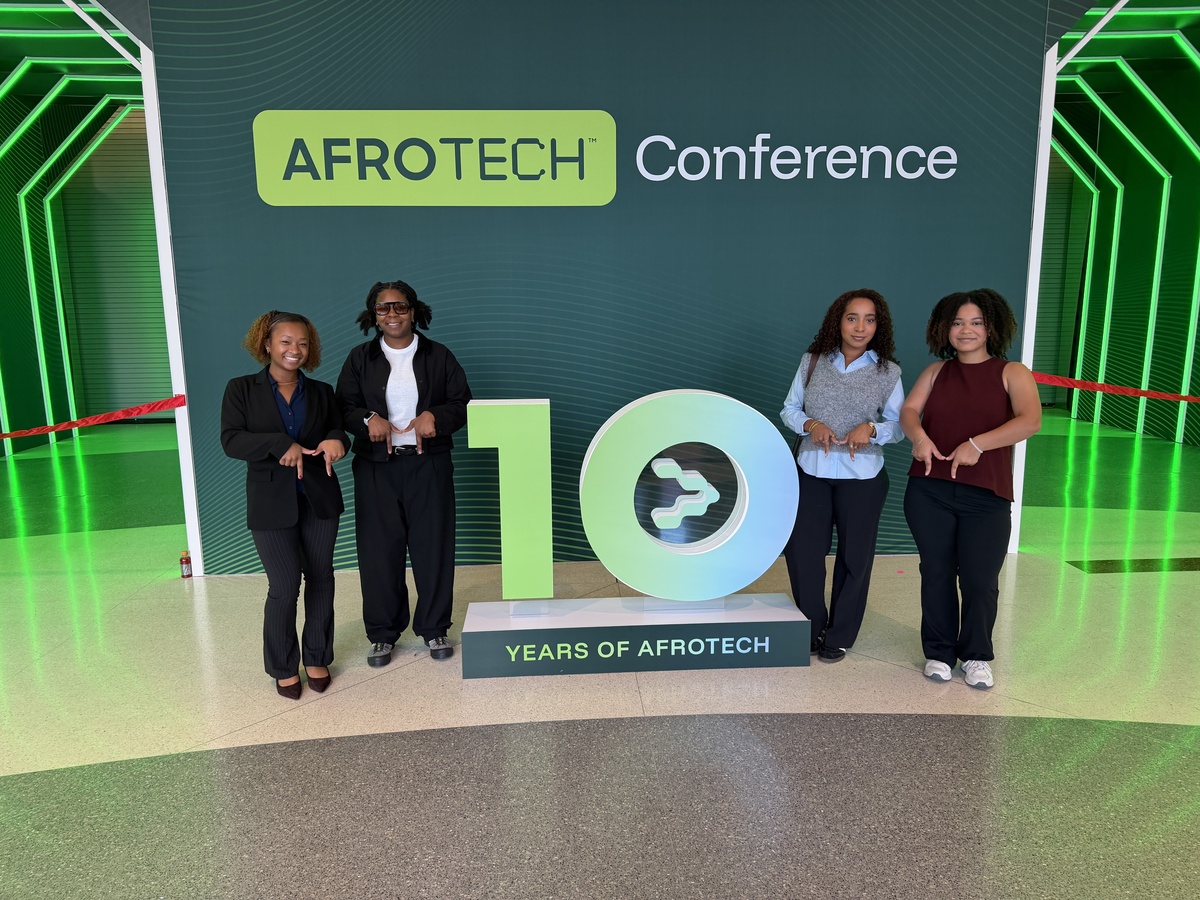
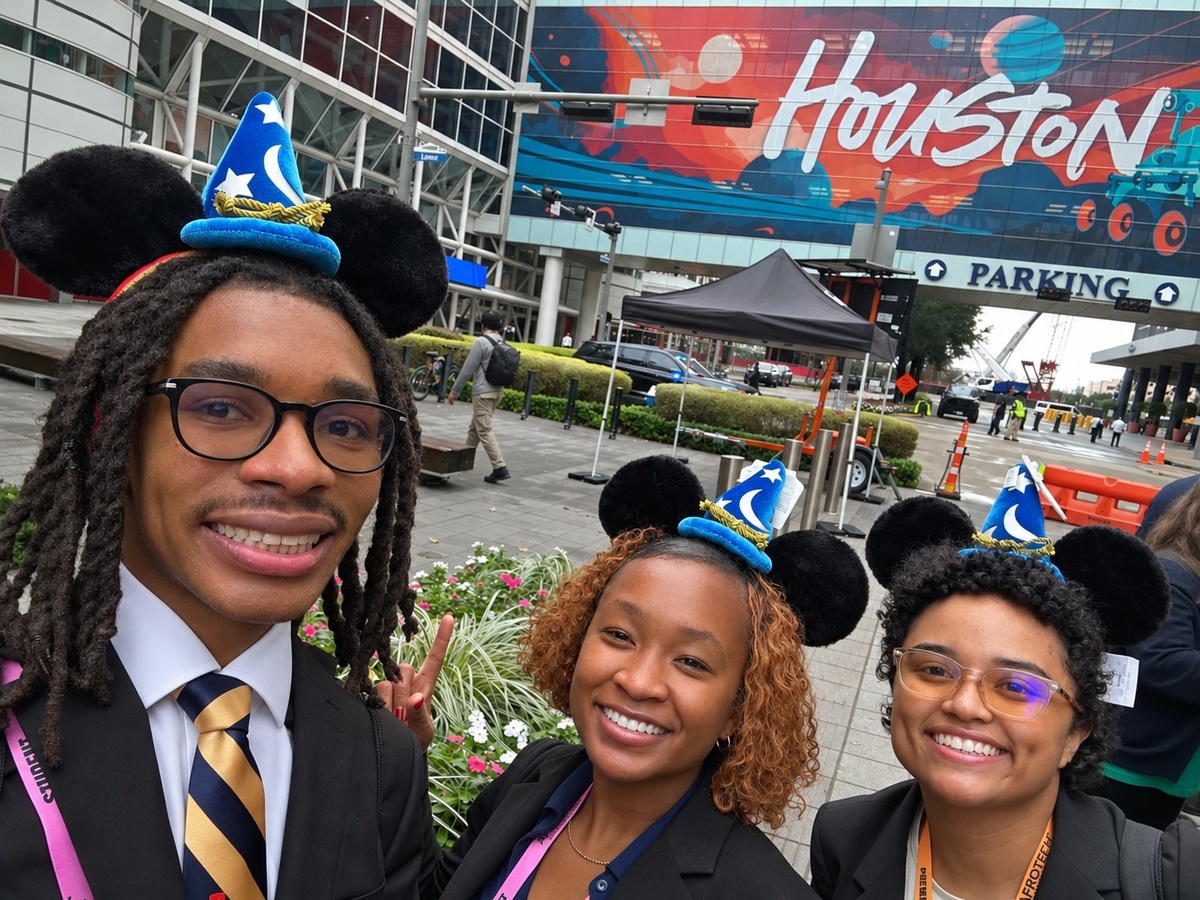
He is one of 12 Black@SI members who traveled to AfroTech 2026, where they pitched recruiters, took advice from industry professionals and reconnected with UMSI alumni.
AfroTech, run by Blavity, is the flagship event for Black tech professionals. It launched in the Bay Area in 2016 with about 650 attendees. This year the event marked its 10th anniversary in Houston, where AfroTech reported about 35,000 citywide attendees, more than 300 speakers and 11 stages.
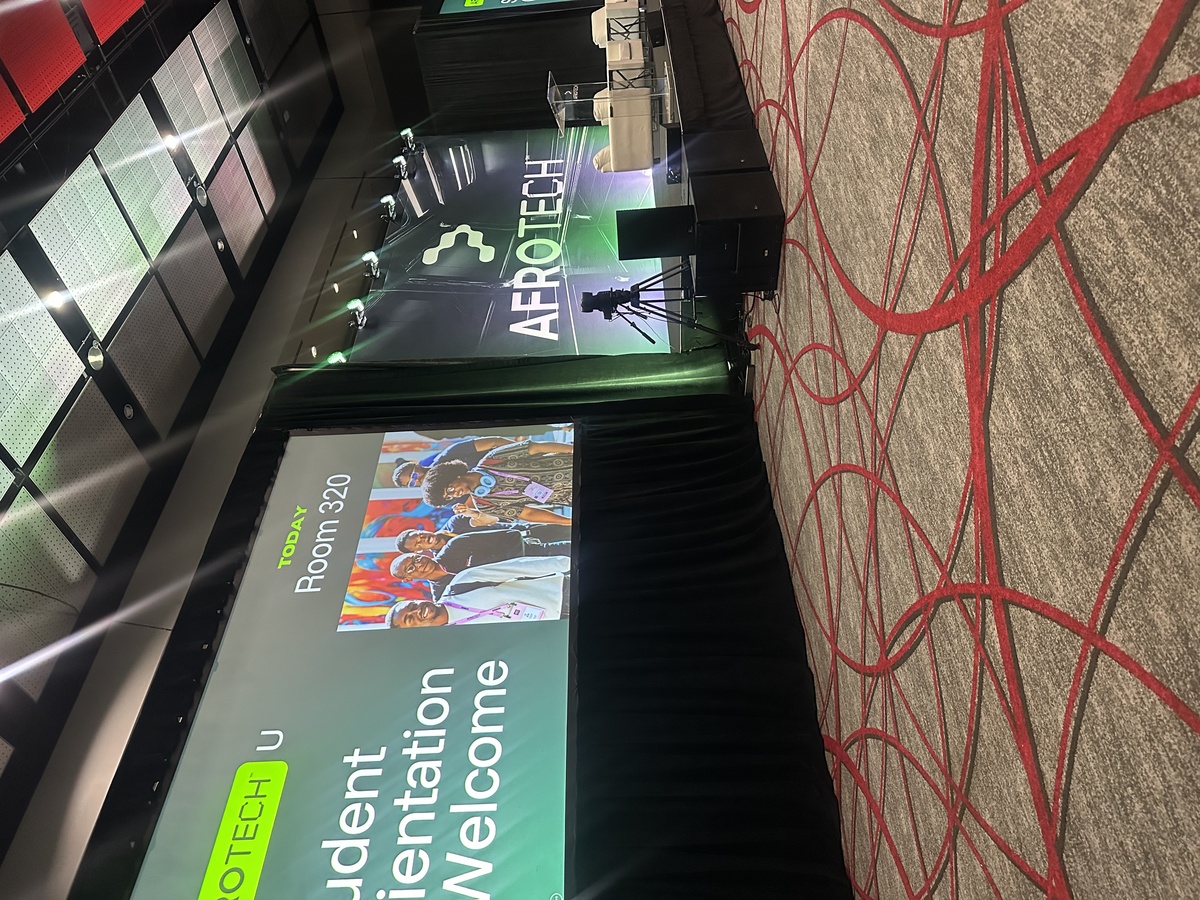
At an academic conference, students present research to peers. AfroTech, an industry conference, is organized around hiring and building: The Expo Hall fills a full floor with companies that come to recruit in roles well beyond engineering, including JPMorgan, Microsoft, LinkedIn and Verizon this year. Sessions cover AI, engineering, entrepreneurship and the future of work, and AfroTech U gives students their own orientation and programming.
For Black@SI, getting to Houston took months. Cornelious and the organization spent July through October raising funds to send 12 members to AfroTech 2026. The group pulled together more than $13,000, with help from the Black Student Union at the University of Michigan and UMSI Student Life.
Cornelious says the effort “showed that under pressure, I can still carve out a way forward.” He adds, “I can carry the leadership skills that I garnered from the fundraising and facilitation of this trip into my studies and career.”
And into the Expo Hall. When the doors opened, the crowd flooded in to network with recruiters. It was Cornelious’ first AfroTech, and the feeling was “anxiety-inducing and intimidating at first,” he says, with the crowd “all looking to earn internships and job opportunities from the experience.”
But as he talked with representatives from numerous companies, the anxiety dissipated. Cornelious says it was one of the first times he had spoken with so many recruiters, and it “really tested my social and emotional skills of effectively communicating who I am in the professional world.”
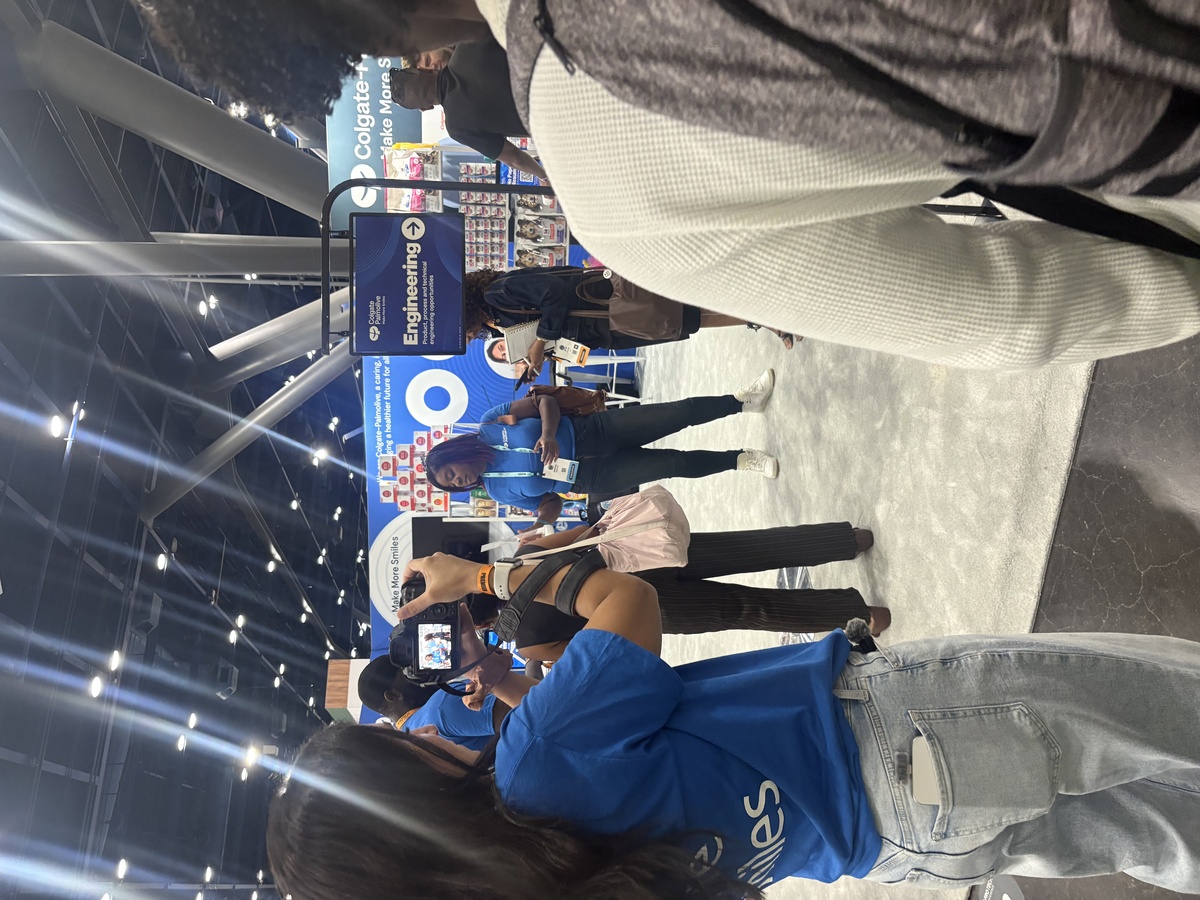
Elsewhere in the Expo Hall, Megan Windham (BSI ’27), president of Black@SI, got useful advice from a Foot Locker employee who listened to her elevator pitch: Be more aggressive about what she wanted and what she was looking for. “I immediately applied his advice to conversations with other recruiters throughout the conference,” Windham says.
Nkwa Onwudiwe (BSI ’27) also took advice from an industry pro. “A cloud & AI program manager at Microsoft shared a framework that really intrigued me,” Onwudiwe says, “likability, capability and dependability. Do people like you? Can you do the job? Can they depend on you? I’m applying that as I move from student to new grad and think about a career in product management.”
Onwudiwe also connected with a product marketing manager at LinkedIn and with former Black@SI leaders. “I caught up with Tamariah Davis and Nyia George over lunch,” he says. Davis (MSI ’25) was vice president of Black@SI during the 2024-25 school year, and George (BSI ’24, MSI ’25) was president the same year.
“Tamariah was my Summer Bridge Peer Advisor and a big reason I transferred from LSA [U-M College of Literature, Science and the Arts] to UMSI,” Onwudiwe says. “Nyia helped me through the process of landing my Accenture internship, and we got to celebrate my internship offer in person.”
The reunion reflects something Windham also encourages students to do. She says “it’s important to recognize that networking goes beyond recruiters and company representatives,” adding that “the students and peers you meet at conferences can become future colleagues, collaborators and supporters throughout your career.”
For Windham, the Expo Hall also offered representation and community. “I remember walking between sessions and through the Expo Hall,” she says, “seeing hundreds of people networking and exchanging ideas. It was inspiring to see so many people who looked like me thriving in an industry where African Americans are often underrepresented.”
“Being surrounded by my Black@SI peers gave me an added sense of confidence and accountability,” Windham adds. “It reminded me that professional growth doesn’t always have to be an individual journey.”
AfroTech returns to Houston Nov. 1-5, 2027.