
Data Science/Computational Social Science Seminar: Aparna Ananthasubramaniam and Yulin Yu

The Data Science/Computational Social Science (DS/CSS) Seminar Series begins for the winter 2022 term with two University of Michigan School of Information PhD students, who will each give 30-minute talks on their separate research.
Register to attend DS/CSS events at umsi.info/DSCSS
Networks and Identity Drive Geographical Properties of the Diffusion of Linguistic Innovation
Aparna Ananthasubramaniam
Abstract:
Adoption of cultural innovation (e.g., music, beliefs, language) is often geographically correlated, with adopters largely residing within the boundaries of relatively few well-studied, socially significant areas. These cultural regions are often hypothesized to be the result of either identity performance driving the adoption of cultural innovation, or (ii) homophily in the networks underlying diffusion. While social scientists often treat either network or identity as the core social structure in modeling language change, we show that key geographic properties of diffusion actually depend on both factors, as each one influences different mechanisms of diffusion. Specifically, we find that the network principally drives spread between urban counties via weak-tie diffusion, while identity plays a disproportionate role in transmission between rural counties via strong-tie diffusion. Our work suggests that models must integrate network and identity in order to understand and reproduce the adoption of innovation.
Speaker bio:
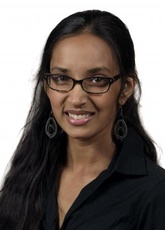
Aparna is a third-year PhD student at the University of Michigan School of Information, advised by Daniel Romero and David Jurgens. Her research interests include computational social sciences and complex systems.
Demographic Disparities in Wikipedia Coverage: A Global Perspective
Yulin Yu
Abstract:
Wikipedia has become one of the primary sources of knowledge on the web. It aims to document knowledge from the natural point of view. However, studies have identified the existence of various kinds of bias in Wikipedia articles. For example, gender inequality has been found in topics, word choice, coverage, and references on Wikipedia biographies. Prior studies have focused on only measuring bias in a single language edition of Wikipedia or in multiple languages separately. This helps us understand how bias can impact who becomes popular within one culture. It is still unclear how demographic bias limits people from passing the threshold of recognition across cultures. In this paper, using about 800K articles from WikiProject Biography over ten years across the 12 largest language editions of Wikipedia, we study global demographic bias in Wikipedia coverage across multiple languages regarding gender, ethnicity, age, and nationality. We measure global coverage in several ways, including page existence, length, and global consensus, which measures content similarity across languages. We find that minorities in ethnicity and nationality are still covered less than their majority counterparts. Fortunately, from 2010 to 2020, we observe a significant reduction in global coverage bias.

Speaker bio:
Yulin is a second-year PhD student at the University of Michigan School of Information, where she is advised by Paramveer Dhillon and Daniel Romero. Her research interest is broadly in computational social science and information diffusion. Specifically, she applies data science methods including causal inference, network analysis, natural language processing, machine learning, and experiment to study information flow within organizations and what drives the popularity of people (e.g artists, scientists) and cultural artifacts (e.g music, vlog, social media posts).
Before coming to UMSI, she worked as a multimedia journalist reporting stories on global culture such as HIV in Uganda and Chinese calligraphers in US, at the Daily Monitor (leading media at Uganda), Indiana Daily Student, and Inside Magazine.