
Data Science/Computational Social Science Seminar: Michael Ekstrand

You Might Also Think This Is Unfair: Operationalizing Fairness and Respect in Information Systems
Abstract:
Every day, information access systems mediate our experience of the world beyond our immediate senses. Google and Bing help us find what we seek, Amazon and Netflix recommend things for us to buy and watch, Apple News gives us the day's events, and LinkedIn helps us find new jobs. These systems deliver immense value, but also have profound influence on how we experience information and the resources and perspectives we see. The influence and impacts of these systems raise a number of questions: How are the costs and benefits of search, recommendation, and other information access systems distributed? Is that distribution equitable, or does it benefit a few at the expense of many? Are they designed with respect for their users, producers, and other affected people?
In this talk, I will discuss how to locate specific questions about the equity of an information access system in a landscape of harms, present some of my own group's work on quantifying and measuring systematic biases, and look to a future of engaged, human-centered research and development on information access systems grounded in the dignity and well-being of everyone they affect.
Speaker bio:
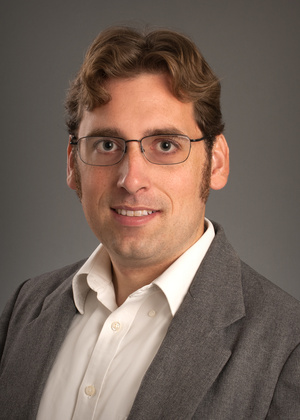
Michael Ekstrand is an assistant professor in the Department of Computer Science at Boise State University, where he co-directs the People and Information Research Team (PIReT). His research agenda blends human-computer interaction, artificial intelligence, and information retrieval to make sure that information access systems are good for all the people they affect. He does this through a combination of data analysis, simulation, and system-building. In 2018, he received the NSF CAREER award to study how recommender systems respond to biases in input data and experimental protocols and predict their future response under various technical and sociological conditions.
He received his PhD in 2014 from the University of Minnesota, building tools to support reproducible research and examining user-relevant differences in recommender algorithms with the GroupLens research group. He leads the LensKit open source software project for enabling high-velocity reproducible research in recommender systems and co-created the Recommender Systems specialization on Coursera with Joseph A. Konstan from the University of Minnesota. He is currently working to develop and support communities studying fairness and accountability, both within information access through the FAccTREC and FACTS-IR workshops and the Fairness track at TREC, and more broadly through his contributions to the ACM RecSys and FAccT conferences.
Register to attend DS/CSS events at umsi.info/DSCSS