
UMSI capstone team helped app users get in touch with nature during COVID-19
Thursday, 06/24/2021
For their senior capstone project in 2020, four Bachelor of Science in Information (BSI) grads worked on an app with a low-tech mission that presented a unique user experience design challenge.
Destiny Franks, Bridget Doherty, Julia Lauer and Yongjae Kwon teamed up with Adrian Laurenzi, CEO and founder of the outdoor recreation and transportation app TOTAGO (Turn Off The App - Go Outside).

TOTAGO is a web and mobile platform that allows users to easily find and plan hiking trips and other outdoor activities using public transit and other car-free transportation. Its services reach many through white label apps (apps built by a third party and offered under different brands) born of partnerships with parks departments and other land stewards.
“We’re all into outdoorsy things, which is why we were all interested in this project,” said project manager Destiny Franks. Destiny completed her first hike in Barcelona using an offline GPS map, and she saw the TOTAGO project as an opportunity to inspire others to connect with nature.
While TOTAGO is able to help users find and plan expeditions into the outdoors, the app wasn’t designed with a way to track whether users follow through with those plans. That data translates into important information for parks seeking funding and additional resources.
That’s where the UMSI student team came in, supported by UMSI assistant professor Florian Schaub in SI 487: User Experience Final Project.
They were tasked with creating a feature for TOTAGO that tracked users’ activity. Not so easy when the app’s mission revolves around turning it off.

“When we analyzed user survey data, we saw that they really valued offline capability,” said Destiny. “They don’t always have cell signal. After seeing that, we decided that this should be a retroactive activity log.”
The team set off on a rather paradoxical design challenge: Create a feature that will deliver an engaging experience, but not so engaging that it will distract from the app’s purpose.
“I've done a lot of media design, and the point of media design is to get people on your app and keep them on your app,” said research team member Bridget Doherty. “You want to send them down this wormhole of features and information.
“For this app, though, we wanted people to be able to enter their information and then get off. So the process had to be seamless, quick and beneficial until they need it again.”
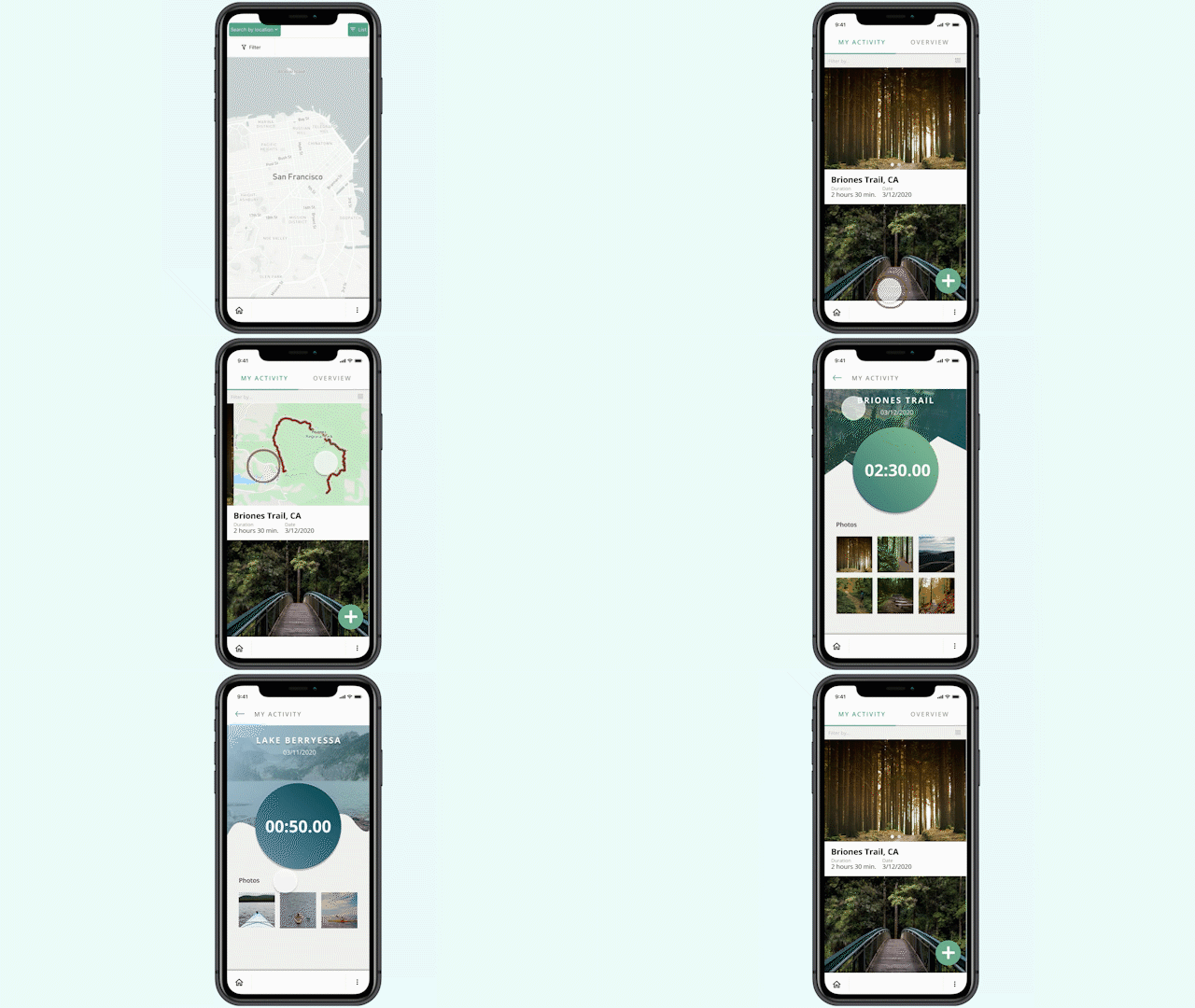
While performing their competitive analysis, the student team knew that they wanted to set TOTAGO’s activity tracker apart.
“We found that a lot of hiking apps are more exercise-focused, more about metrics and improving performance, whereas we just want to improve spending time outside,” said Bridget.
“We're trying to get more qualitative,” added Destiny, citing space in the tracker for users to make notes about the trail and upload photos.
Unfortunately, as soon as they solved their main challenge, the students were hit with a much more difficult and unexpected one: COVID-19. When the virus began to break out in Michigan, the team’s process, classes and lives were disrupted tremendously.
“We had just finished the designs and were going into the validation phase when classes went remote,” said Destiny. The transition was difficult, she said, but opportunities to meet remotely with her team provided welcome distraction from the pandemic.
The students were surprised when remote validation testing even presented some benefits.
“When you do user testing and people have the prototype right in front of you, it's tempting to tell them, ‘Oh, just click over there, that's how you do it,’ or, ‘Here, let me fix this prototype, it's not working,’” said Bridget. “They really were just using the prototype like they would be using the product: by themselves without any guidance.”
At the end of the spring 2020 semester, the student team presented their final minimum viable product (MVP) to their class, client and guests over Zoom and received high praise.

“Love the idea moving in the direction of this activity tracking feature evolving toward a platform for advocacy,” responded TOTAGO CEO and founder Adrian Laurenzi. “I think the activity log MVP could be a really solid foundation for going in that direction."
The student team said they’re proud of what they delivered, especially under the extreme circumstances, and they’re looking forward to seeing where the app goes from here.
“The activity log was launched in February 2021 and is now live on the TOTAGO website and mobile app,” said Bridget Doherty, who has continued to work with clients as a user experience designer at PwC’s Experience Center since the project.
“I really hope that TOTAGO continues growing,” said Destiny. “It's really cool that I can feel like I trust TOTAGO, and I hope that they continue making partnerships with these public lands and continue advocating for people going outdoors.”
Now, Destiny is working as a user experience designer and illustrator for Transforming Research into Action to Improve the Lives of Students (TRAILS), a program through Michigan Medicine bringing mental health care to students with symptoms of depression and anxiety throughout Michigan.