
Game on: 3 UMSI outreach programs create new pathways into the field of information

Tuesday, 10/14/2025
Video games were the assignment, not the distraction, for rising high school seniors who enrolled in Information Science 001 this summer. They were participating in the Wolverine Pathways Summer Institute, a pre-college program for students from Detroit, Southfield, Ypsilanti and Grand Rapids that features courses designed and taught by University of Michigan faculty.
Natalie Fang, a lecturer at the U-M School of Information, designed the kind of course a student might dream up: “Games and UX: Researching and Advocating for Better Video Games.”
Fang has made a career out of video games — she is the founder and CEO of Nochi, a video game startup based out of downtown Ann Arbor that publishes anime video games made for women.
“There is research that shows video games are a great way to inspire underrepresented students to pursue the computer science and information field,” Fang says. “I wanted to teach this course to help young scholars learn critical thinking skills that can be applicable to so many different fields, through the study of video games.”
User experience research — the study of how a player interacts with a game — is a critical part of the game development process. Good UX design not only creates engaging experiences for players, but also creates games that sell.
In Fang’s course, scholars conducted their own UX research on a video game of their choice, then synthesized those findings into recommendations for video game developers, publishers and investors. They then used their newfound knowledge of UX design principles to pitch their own game designs.
“The scholars are so incredibly creative,” Fang says. “There were definitely a few final projects I would play if the students fully pursued the development of their designs.”
And some of them might. Fang teaches an undergraduate-level course on games and UX at UMSI, and she has been humbled and thrilled to hear from former students who say the class inspired them to pursue graduate studies in UX.
Expanding the playing field
The earlier students learn about the opportunities available to them in the information science field, the more likely they are to pursue them. In 2022, UMSI partnered with Wolverine Pathways to offer a week-long summer program for rising 10th and 11th graders called the Information Changes Everything Camp.
“K-20 educational outreach is a big part of how UMSI lives out its mission,” says Sandra Lopez, UMSI’s K-20 educational outreach program manager. “We are building early awareness and creating real entry points into college and careers in information.”
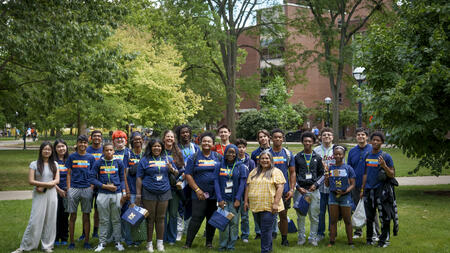
19 students attended this summer, participating in hands-on sessions with UMSI faculty and students that showed them just how relevant information science is to their lives.
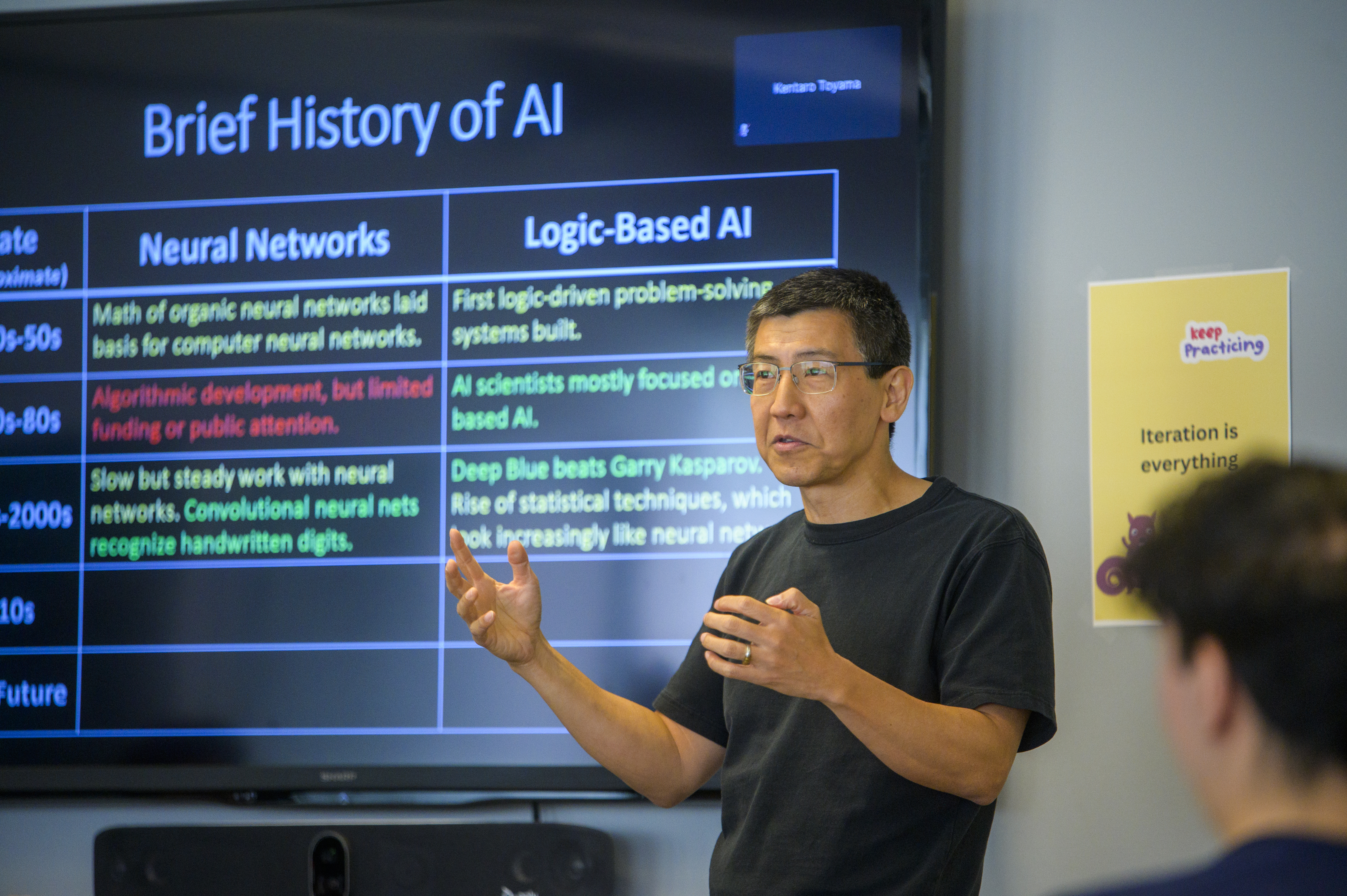
Kentaro Toyama, W. K. Kellogg Professor of Community Information, presented on artificial intelligence and society, tracing the development of AI from its origins to its current state, while highlighting its ethical implications.
Professor Kishonna Gray guided students through an exploration of how social media platforms shape public perception, contribute to misinformation and influence cultural narratives, while assistant professor Christopher Brooks introduced students to the field of sports analytics. His session was capped with a special treat: a tour of Michigan Stadium.
Campers also joined in a design jam, an interactive session on coding in Python led by PhD student Aadarsh Padiyath, and a course on UX research and design that was developed and taught by UMSI lecturer and alumna Minali Desai.
“This kind of outreach encourages curiosity by showing students how their interests can connect to real-world challenges and solutions,” Lopez says. “At the end of the day, it is about making sure that everyone has a chance to be part of shaping a better world and that the benefits of information education are accessible and far-reaching.”
“Far-reaching” is a fitting descriptor for UMSI’s longest-running educational outreach program, the Community College Summer Institute, which has served 260 community college students since launching in 2017.
26% of CCSI fellows have gone on to enroll in UMSI’s Bachelor of Science in Information program, with an additional 17% enrolling in another U-M college. All together, 100 CCSI fellows have pursued their four-year degree at U-M.
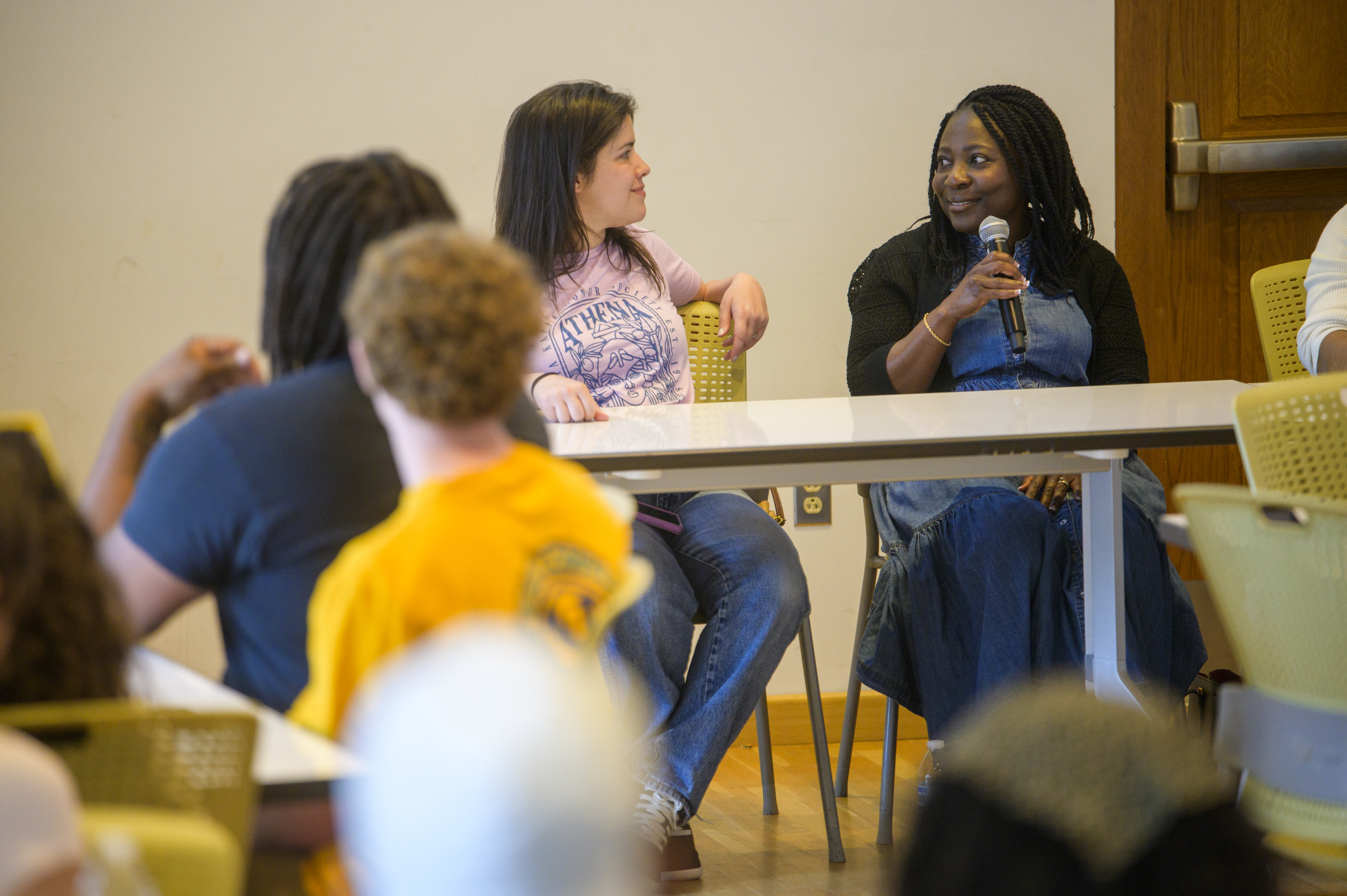
“This year marked the first time we were able to feature a panel of current UMSI students and recent graduates who previously participated in CCSI,” Lopez says. “They shared their full journeys, from first learning about CCSI to attending the program, applying to the BSI, transitioning to UMSI and ultimately graduating.”
Suezanna Barajas, a Schoolcraft College student who attended CCSI this summer, hopes to embark on that full journey. She is majoring in sound and recording technology, and has been teaching herself how to code.
“CCSI has influenced my plans by helping me realize my desire to continually learn more about technology,” Barajas says. “When I learned about the School of Information, I recognized that this program might be the perfect fit for me. I’m thrilled to share that I’m gearing up to apply for fall 2026.”
The Community College Summer Institute is supported by the John, Karen and Casey Cameron Community College Fund, with additional support from David Choi (MSI ’06).